Bio Digital Art, Algorithmic Divination, Animal-Computer Interaction, I Ching, Posthumanism,Yin-Yang, Video 3:53
7/2025
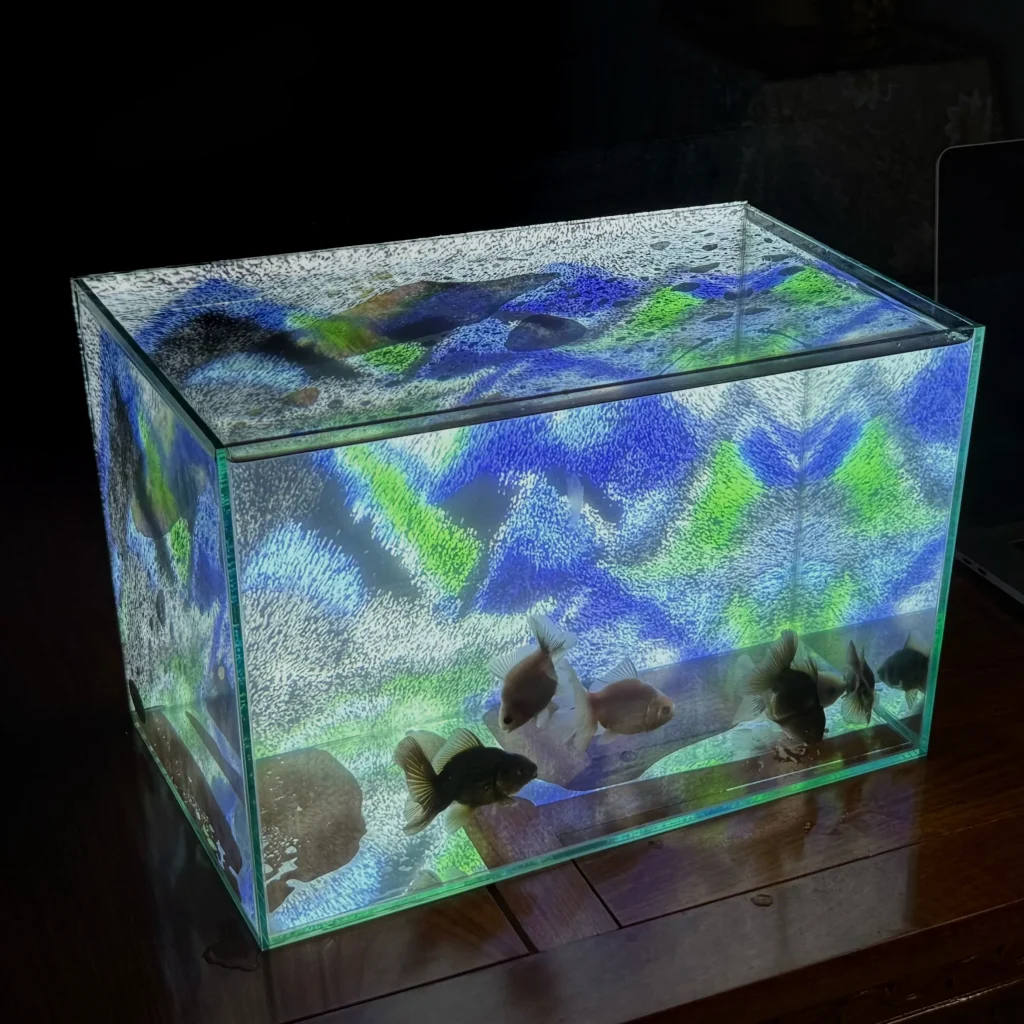
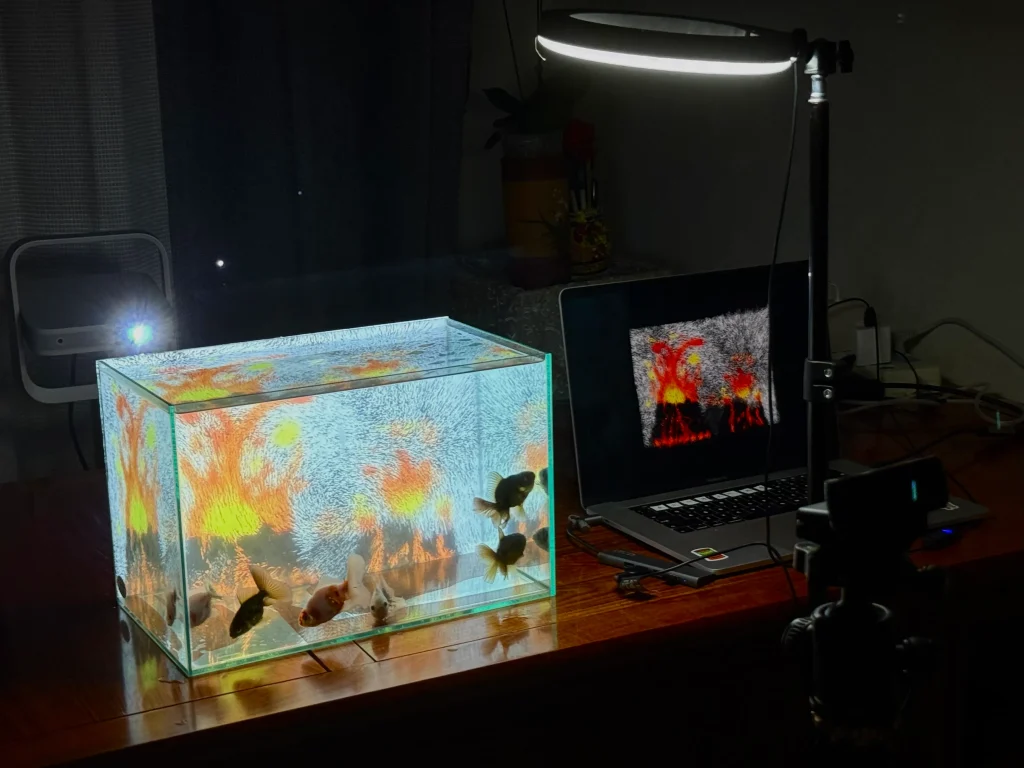
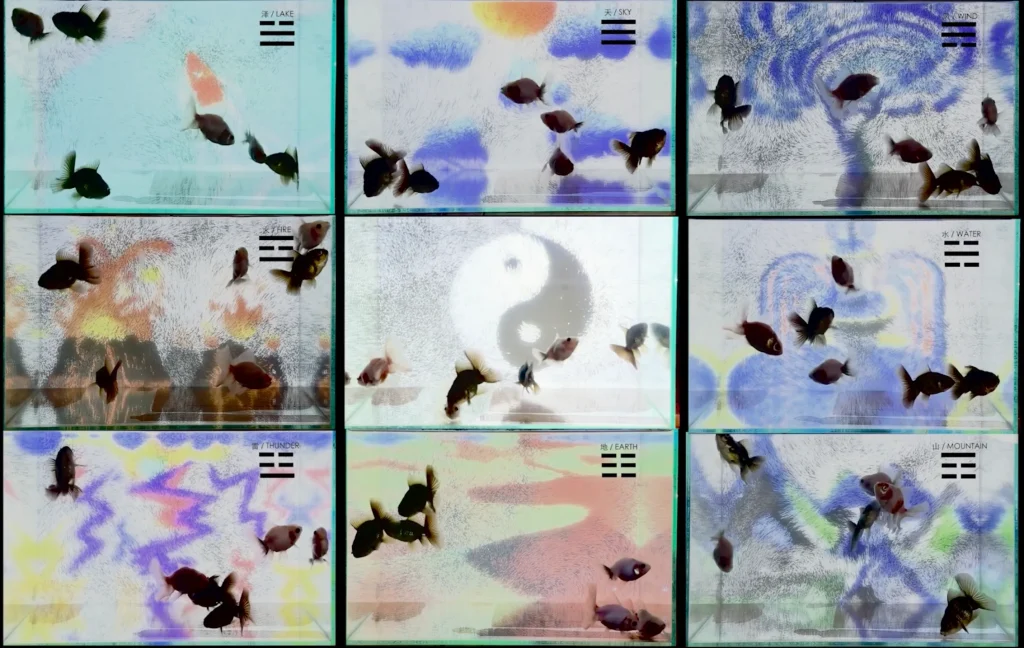
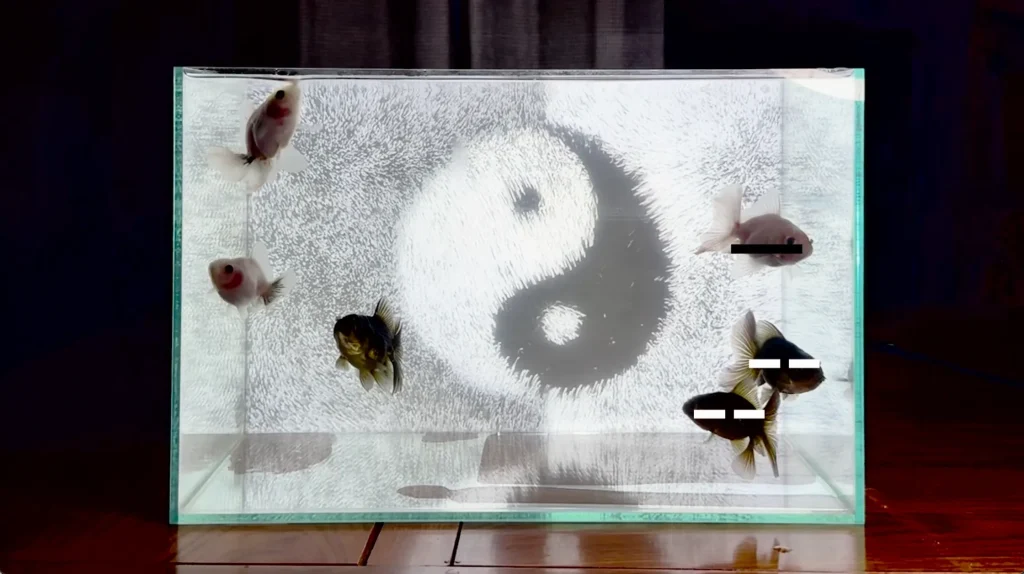
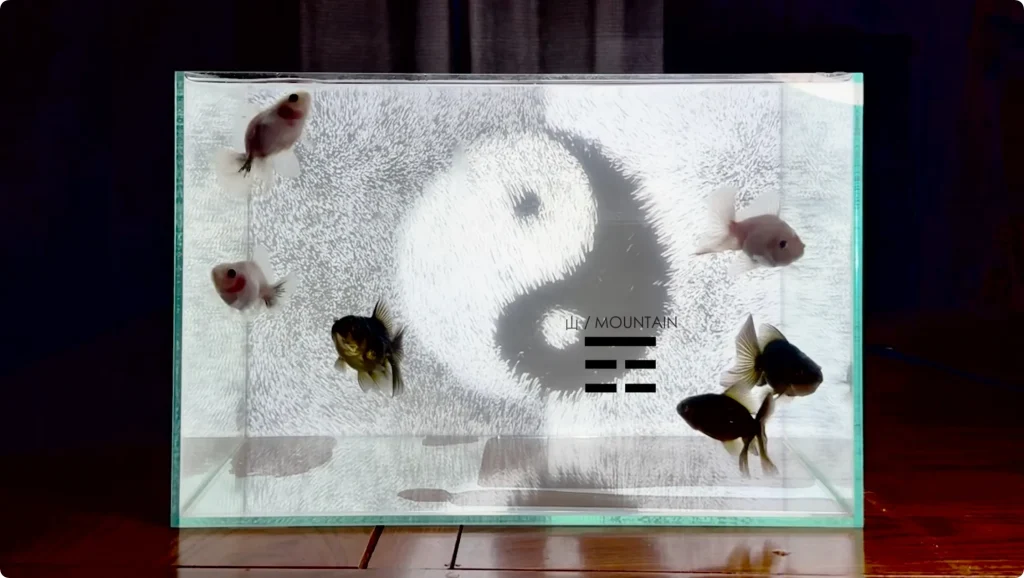
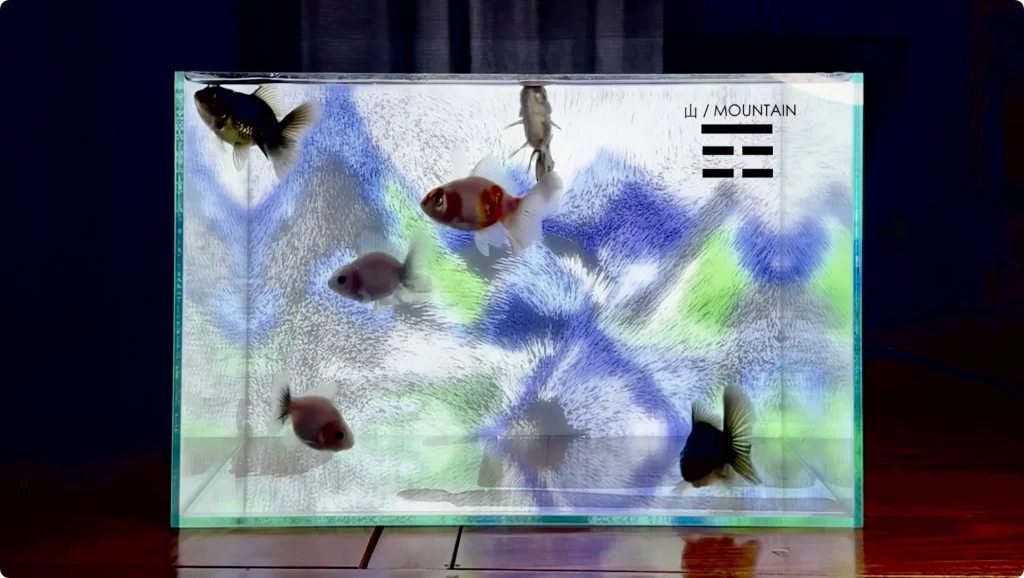
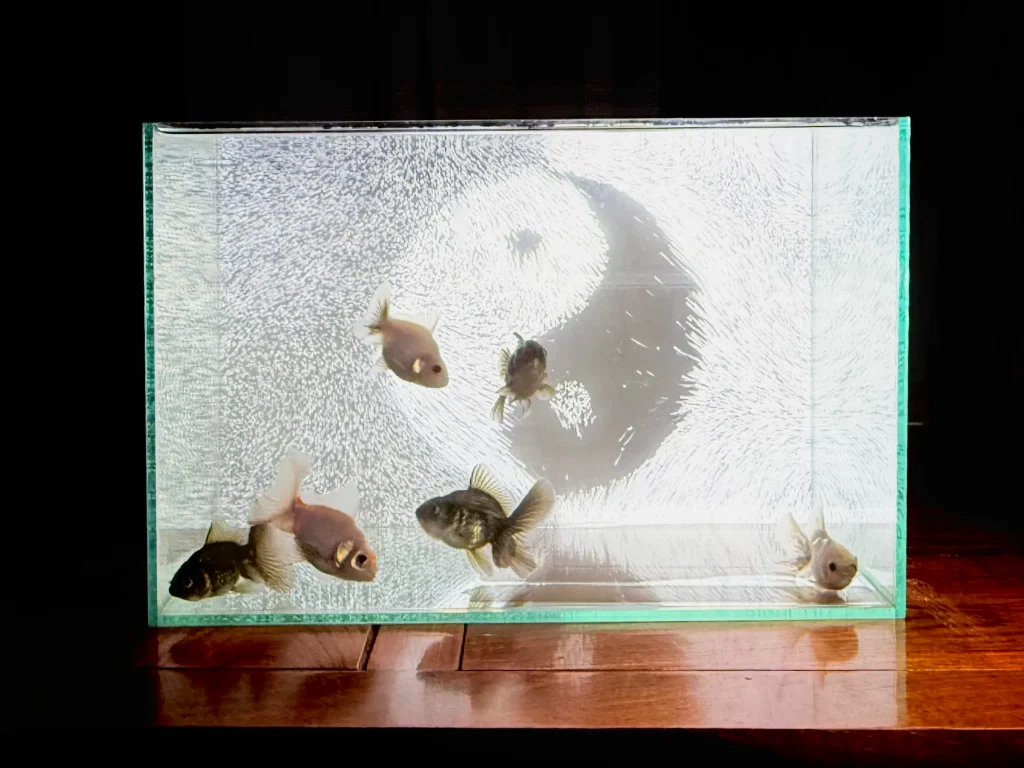
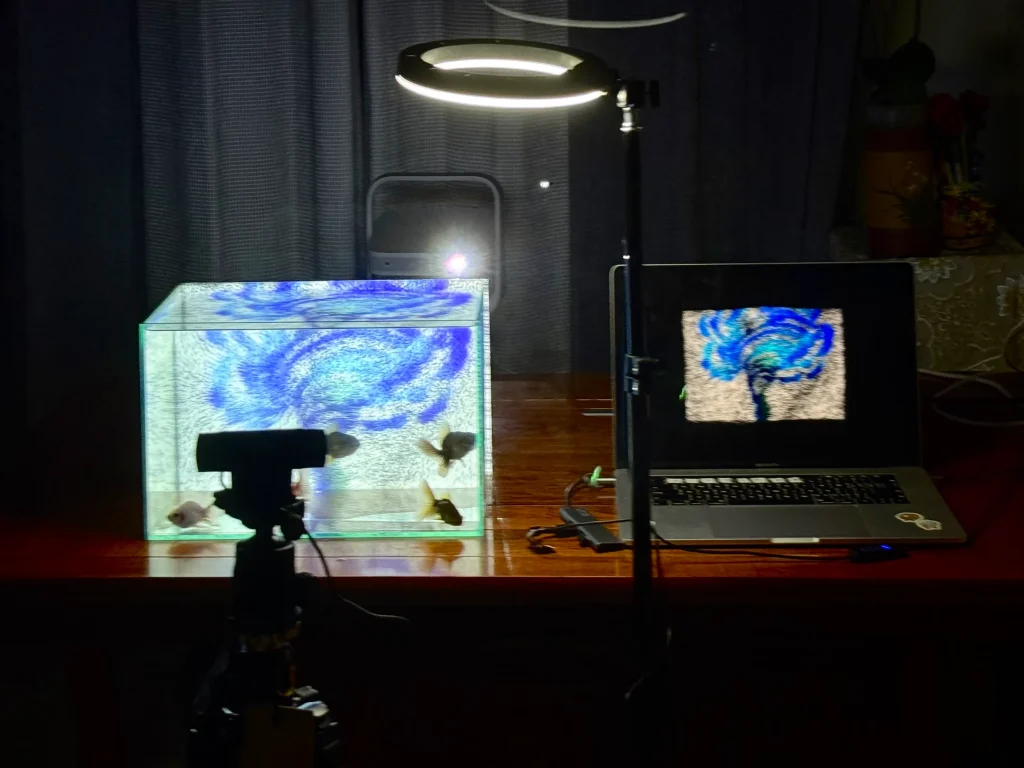
Yi·Fish: For Whose Will, This Coronation is a generative BioArt installation constructed through the interplay of living organisms, computer vision, and the cosmological system of the I Ching. Within a transparent tank, three black fish and three white fish are placed to symbolize yin and yang. Whenever any three fish come within 8 centimeters of one another, YOLOv11 identifies their yin–yang configuration—such as “white–white–black”—and translates it into the corresponding hexagram, for instance “Wind,” which then triggers the real-time generation of wind-like visual projections in the background.
Divination, originally a human act for interpreting the world, is here transferred onto the unconscious movements of the fish, shifting the production of meaning from “human divination” to a “life–algorithm collaboration.” The algorithmic gaze imposes micro-classifications and subtle regulation upon the fish, yet the fish’s randomness continuously disrupts the system, forming a loop in which control arises from the uncontrollable: the algorithm depends on the contingency of life, while life repeatedly resets the algorithm.
Through the ongoing convergence and separation of yin and yang fish, the tank becomes a dynamic generator of hexagrams, where the fish’s immediate motions and the projection’s real-time transformations form a posthuman network of relations. This network reveals the asymmetries of cross-species power under technocapitalism while hinting at the latent possibility of a future Symbiocene. Rather than offering fixed meaning, the work confronts viewers with a central question: when life, algorithms, and chance co-produce the world, how are control and subjectivity redistributed?